How many axes actually move?
On a ram or sinker EDM, X and Y are positioned for setup and then stay put; Z keeps travelling. All three still have to be counted.
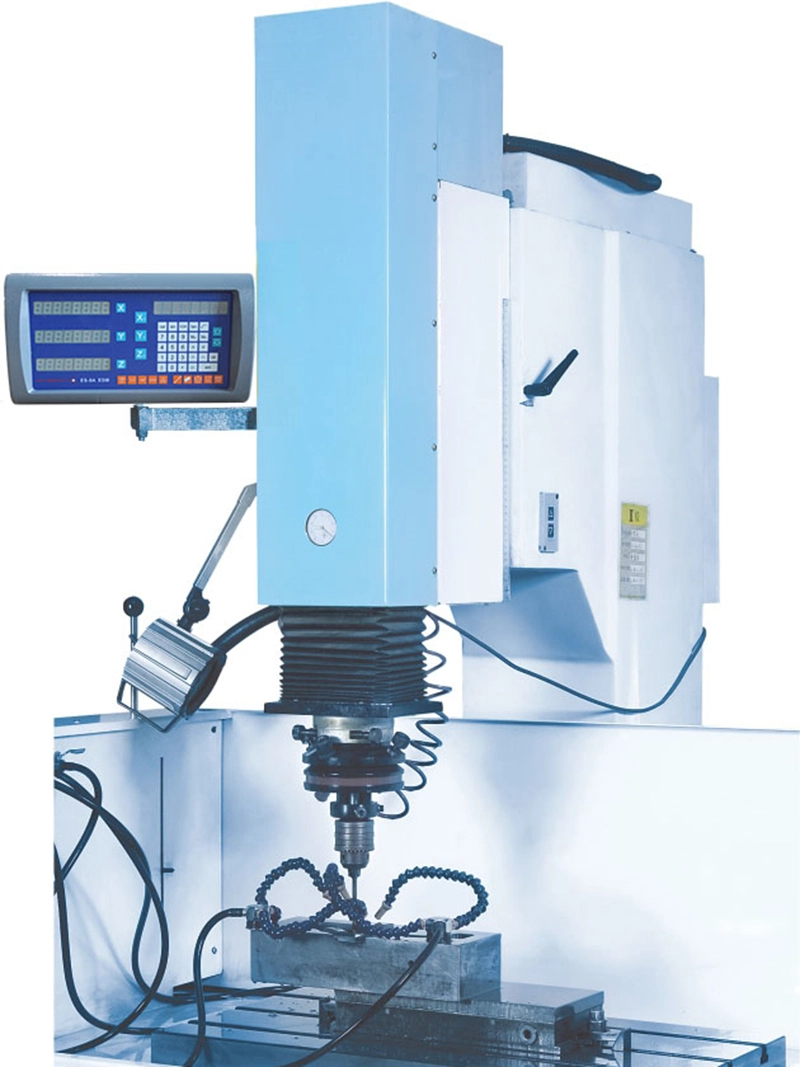
Axis configurationThe ES-8A EDM is built for ram and sinker work, where X and Y are set once and held for the entire burn while Z travels continuously — which makes depth, not general position tracking, the display's real job. As an edm digital readout it shows the deepest position the electrode has reached alongside the target machining depth, and closes a relay to stop the machine once that depth is met. As a 3 axis edm digital readout it counts three linear encoders over A/B (TTL) signal, so X, Y and Z are all measured rather than assumed.
Settle these three answers and the specification mostly writes itself. Each card routes to the section that resolves it.
On a ram or sinker EDM, X and Y are positioned for setup and then stay put; Z keeps travelling. All three still have to be counted.
Axis configurationThe ES-8A EDM provides a relay output that stops the EDM machine automatically once the electrode reaches the target machining depth.
Capability checklistThe output is always in the Activate state on power loss or reset, so the machine is stopped and locked rather than left burning.
Fail-safe behaviourA milling readout follows a cutter through a program. An EDM readout follows a burn that does not move in X or Y at all — and that difference decides the configuration.
The product page describes the pattern plainly: on the EDM machine the X and Y axes do not move during the whole machining process, while the Z axis keeps moving up and down. The readout's most important mission is precise control of machining depth — and because Z keeps travelling, judging electrode depth by eye is very difficult for the operator.
That is why a three-axis configuration is not a rounding-up of the spec sheet. It is the minimum that keeps the X/Y datum and the Z depth on the same display at the same time.
| Axis | Role during setup | Role during the burn | What the display must provide |
|---|---|---|---|
| X | Datum and electrode offset reference | Held at position | ABS / INC reference and REF memory so a datum survives a shutdown |
| Y | Second datum axis; also used for hole and bolt-circle work | Held at position | Clear Zero, centring (1/2), PCD and LHOLE routines |
| Z | Electrode zero and start depth | Continuous up and down travel for the whole cycle | Deepest-position display, target-depth display, relay output to stop the machine |
| Axis count | Three linear encoders wired to the display | All three counted for the whole machining process | 3 linear encoder inputs on A/B (TTL) signal |
Specify fewer than three axes and only two outcomes are available: Z depth is no longer counted against the electrode zero, or the X/Y datum that the hole and bolt-circle routines rely on is lost.
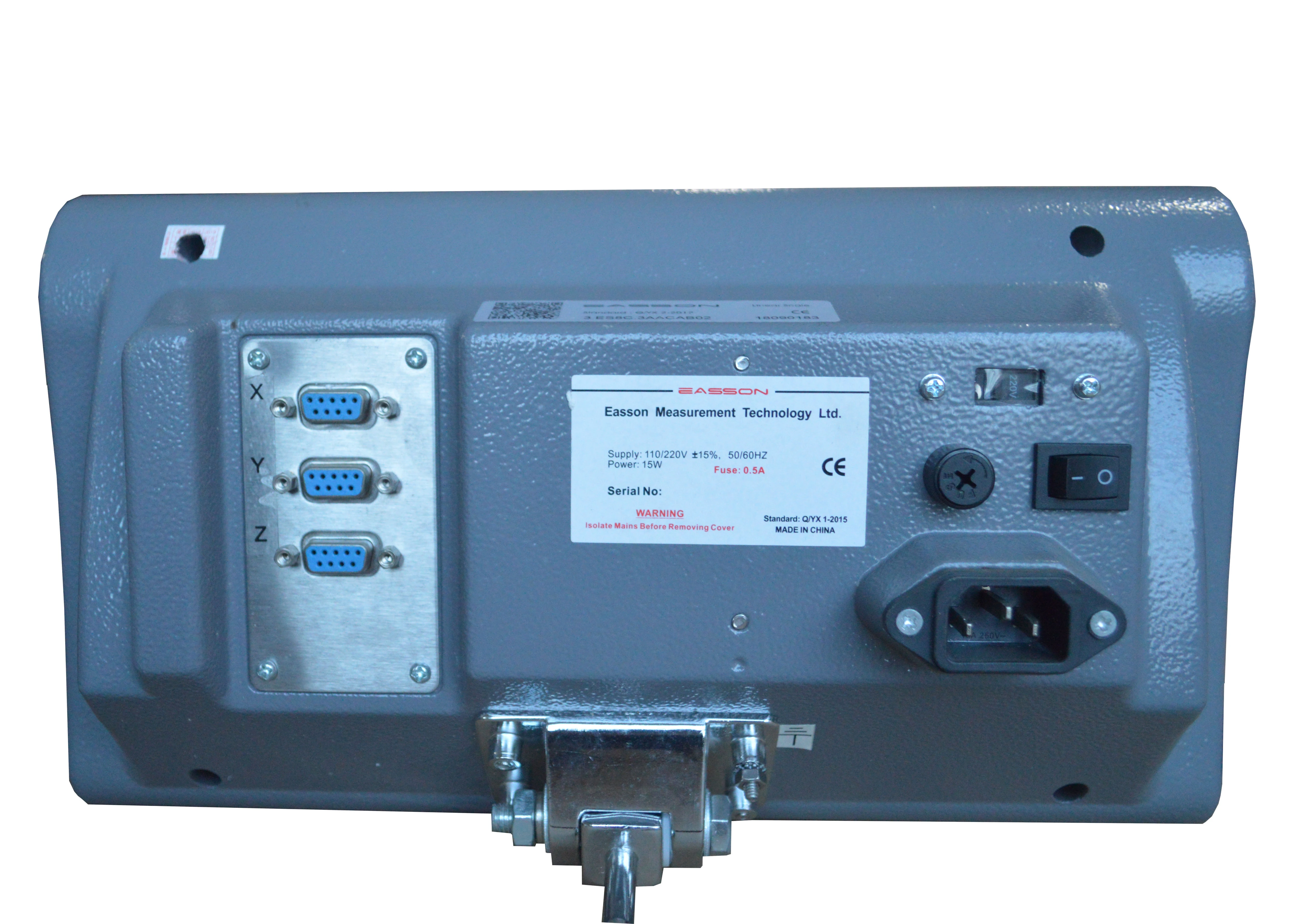
Every row below is a function the ES-8A EDM actually lists. "Required for EDM" means the EDM workflow breaks without it; "Nice-to-have" means it improves handling but does not decide whether the unit works on your machine.
| Capability | Status | Why it matters on an EDM |
|---|---|---|
| Deepest-position display | Required for EDM | Z travels for the entire burn; without a remembered maximum, the operator cannot see how far the electrode has actually reached. |
| Target machining depth display | Required for EDM | Supplies the depth the stop logic compares against — the number the whole burn is aimed at. |
| Relay output to stop the machine | Required for EDM | Ends the burn at depth instead of relying on an operator watching Z travel. |
| "Opposite output" fail-safe | Required for EDM | On power loss or reset the output defaults to Activate, stopping and locking the machine instead of letting the burn continue. |
| 1 μm axis display | Nice-to-have | Finer readout for light finishing passes; select per job rather than per machine. |
| 5 μm axis display | Nice-to-have | Coarser setting for roughing, where a 1 μm readout is noise rather than information. |
| Absolute / incremental (ABS / INC) | Required for EDM | Absolute keeps the datum after a stop; incremental is used for step-overs and repeat offsets. |
| Power-off memory (30 subdatum) | Required for EDM | Holds stored positions across a shutdown so the job can be picked up again. |
| 199 subdatum | Nice-to-have | Extra stored positions for repeat jobs and multi-cavity work. |
| Reference memory (REF) | Required for EDM | Lets a scale reference mark be used to restore position rather than re-datuming by hand. |
| Centring (1/2), PCD, LHOLE | Nice-to-have | X/Y hole and bolt-circle routines; useful for start-hole work, not needed for depth control. |
| mm / inch switching and light-touch keyboard | Nice-to-have | Unit switching and key feel — convenience items rather than decision items. |
If the ES-8A EDM loses power or is reset, its output is always in the Activate state, which stops and locks the EDM machine. The reason is stated on the product page: a reset clears the Z-axis electrode position, so an un-stopped burn would continue from a lost reference.
Decision: match the pin pair to your machine's stop circuit before wiring — normally-open stop inputs take pins 6 & 7, normally-closed inputs take pins 6 & 8.
The hardware record for the single EDM unit on this page — model number, resolution, inputs, power and environmental limits in one place.
| Model number | ES-8A EDM |
|---|---|
| Axis number | Three axis |
| Axis display | 1 μm, 5 μm |
| Signal input | A / B (TTL) |
| Inputs | 3 linear encoders |
| Input frequency | 2 MB Hz |
| Voltage range | AC 110 V – 220 V / 50 Hz – 60 Hz |
| Operation | Keyboard light-touch buttons |
| Weight | 3.5 kg |
| Operating temperature | 0 ℃ – 45 ℃ |
| Storage temperature | –40 ℃ – 55 ℃ |
| Relative humidity | ≤ 95 % |
| EMC standard | IEC 61000-4-2 / GB/T 17799-2; IEC 61000-4-4 / GB/T 17799-4; IEC 61000-4-5 / GB/T 17799-5 |
| Certification | CE |
| Brand / origin | Easson / P.R. China |
| Basic functions | Centring (1/2), metric / inch display, ABS / INC, power-off memory (30 subdatum), 199 subdatum, reference memory (REF), clear zero, PCD, LHOLE |
Five common buying situations, the specification value that answers each one, and the check you make before the order goes out.
SpecificationTarget machining depth display, relay output to stop the EDM machine, "opposite output" fail-safe.
DecisionConfirm whether your machine's stop input is normally open (pins 6 & 7) or normally closed (pins 6 & 8) before ordering.
SpecificationThree linear encoder inputs on A/B (TTL) signal.
DecisionVerify what signal type is already on the machine; the ES-8A EDM is specified for A/B (TTL) input, so a mismatched scale changes the order.
Specification1 μm axis display setting, with the deepest-position and target-depth views active.
DecisionSet 1 μm for finishing and 5 μm for roughing — the unit carries both, so the setting follows the job, not the machine.
Specification"Opposite output" fail-safe, plus power-off memory holding 30 subdatum.
DecisionRely on the lock-out to stop the burn, then recover the datum from stored subdatum instead of re-referencing Z by hand.
SpecificationThe ES-8A EDM is specified around EDM depth control — deepest position, target depth, relay stop.
DecisionTreat the mill readout as a separate selection; do not assume EDM depth logic transfers to milling work.
Specification199 subdatum with 30 stored through power-off, plus PCD and LHOLE on X/Y.
DecisionStore one subdatum per cavity so each burn starts from a saved reference rather than a fresh setup.
A single set is enough to start, and the commercial terms are published on the product page rather than quoted per customer.
The unit is CE certified and is tested to IEC 61000-4-2 / GB/T 17799-2, IEC 61000-4-4 / GB/T 17799-4 and IEC 61000-4-5 / GB/T 17799-5.
EMC test equipment, including an ESD immunity tester, is used to make sure all Easson DRO products pass the EMC standard specification.
Packaging is a carton. Brand Easson, place of origin P.R. China, model ES-8A EDM.
Quote requests, technical questions and order follow-up: tony@easson-group.com · +86 158 2056 6978 · No. 937 Anji West Rd., Sanzao Industrial Park, Jinwan District, Zhuhai, Guangdong, China.
Three axes, 1 μm / 5 μm display, A/B (TTL) encoder inputs, relay auto-stop and opposite-output fail-safe. Send your machine details and scale signal type to receive a quote.
Keep adjacent product options together for a faster catalog comparison.
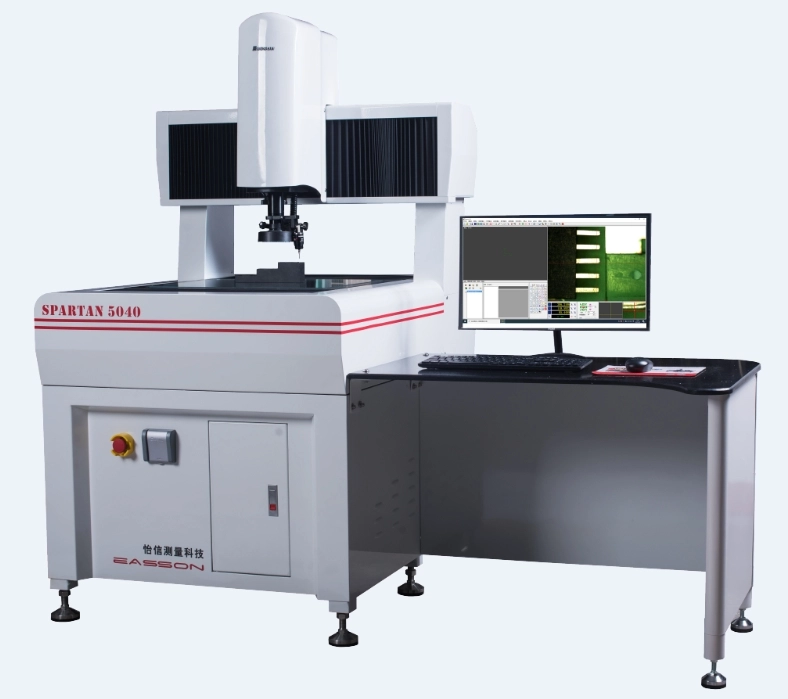
Name: Vision Measuring System Keyword: Video measurement devices Meas. Accuracy: (2.5+L/200)m Meas. Travel: 500 X 400 X 250 mm Camera: High Resolution Industrial Camera Resolution: 0.01m Absolute…
View product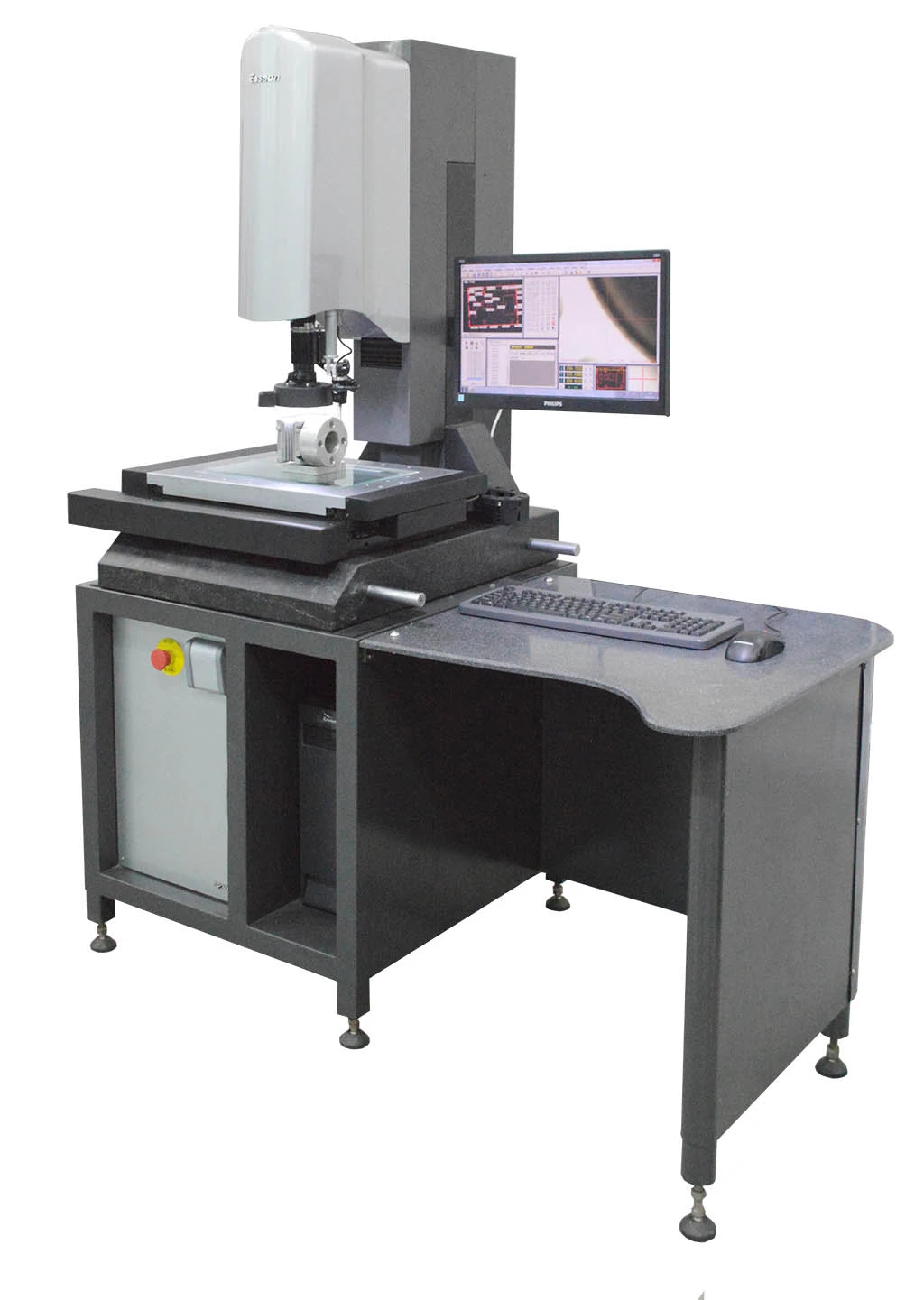
Name: Video Measuring System Keyword: Video Optical Measurements Meas.Accuracy: (1.5+L/200)m Meas. Travel: 300 X 200 X 200 Mm CCD: High Resolution 1/2'' CMOS Camera Resolution: 0.01 m Absolute Scale…
View product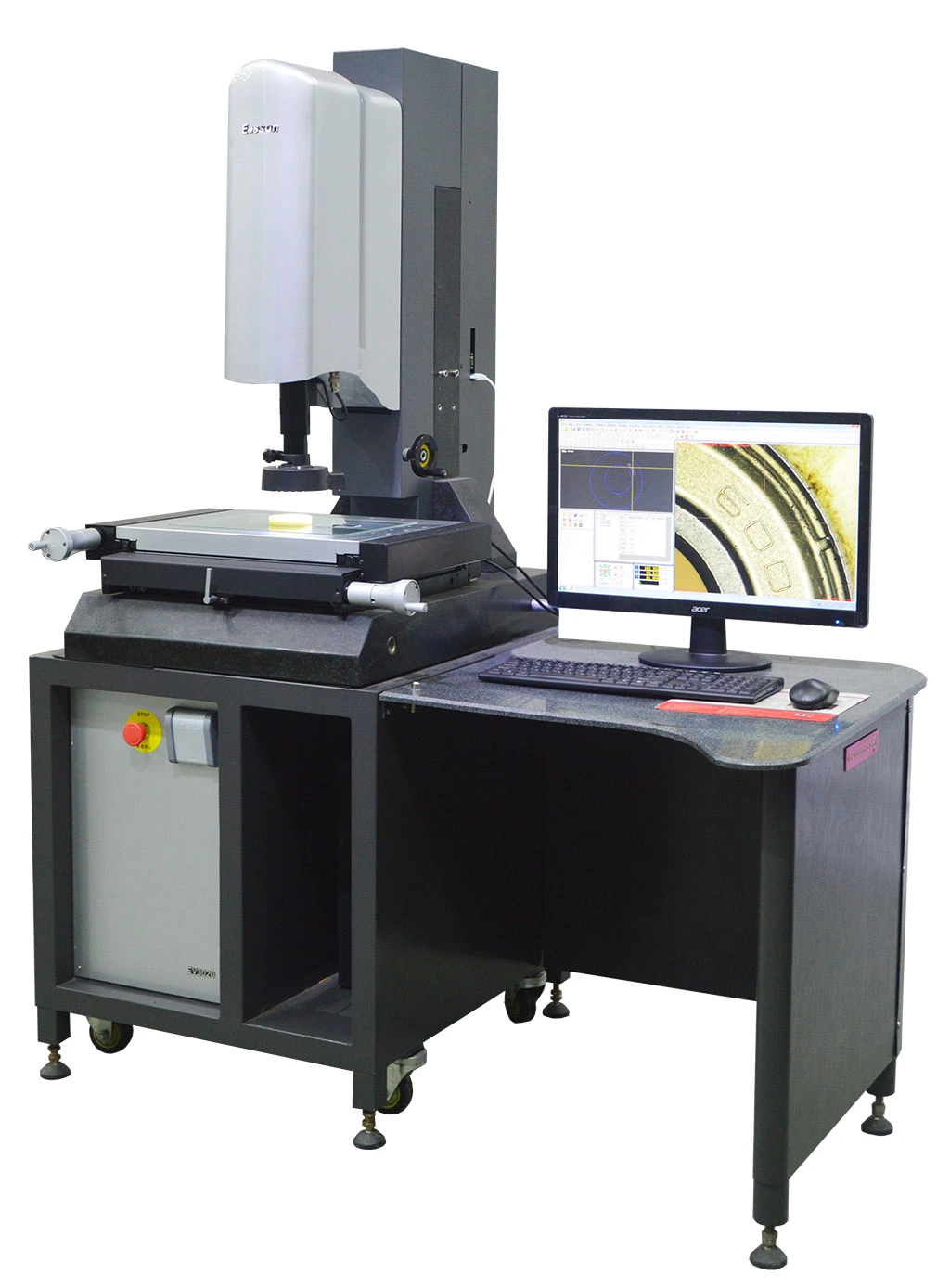
The EV2515 optical coordinate measuring machine delivers 0.01μm resolution and (1.5+L/200)μm accuracy for precise 2D/3D inspection. Advanced auto-zoom lens and granite base ensure reliable…
View productthe es-8a edm is a three-axis edm digital position readout. on the edm machine, x and y do not move during the whole machining process while z keeps moving up and down; the unit's stated most important mission is precise control of machining depth.
it provides a specialized edm operating display that shows the deepest position the electrode has ever reached and the target machining depth. this helps because the moving z axis makes it very difficult for the operator to decide electrode depth.
yes. a relay output stops the edm machine automatically once the electrode reaches the target machining depth.
the es-8a edm uses an "opposite output" design: if it loses power or is reset, its output is always in the activate state to stop and lock the edm machine, avoiding mistaken machining after the dro resets and loses z-axis electrode position.
it accepts three linear encoder inputs on a/b (ttl) signal, with 1 μm and 5 μm axis display settings and an input frequency of 2 mb hz. the voltage range is ac 110 v – 220 v / 50 hz – 60 hz.
for a normally open stop circuit, use pins 6 and 7 (normally open — activated close). for a normally closed stop circuit, use pins 6 and 8 (normally close — activated open). match the pin pair to the machine's stop circuit before wiring.